
If you've lived in Southern California for more than a year, you know what happens when the Santa Ana winds arrive. Temperatures spike. Humidity drops to single digits. Fine reddish-brown dust coats every horizontal surface outdoors — and a surprising amount of it finds its way inside, settling on windowsills, on electronics, and on the mechanical components of your appliances.
Most people wipe down the surfaces and move on. But the dust that accumulates inside your refrigerator condenser, behind your dryer, and in your washer's pump area doesn't wipe off as easily — and over weeks and months it quietly degrades the efficiency and lifespan of every major appliance in your home.
What Santa Ana dust actually is
The Inland Empire sits at the eastern end of a natural wind corridor. When high pressure builds over the Great Basin, air flows rapidly westward and downward through mountain passes, picking up velocity and losing moisture along the way. By the time those winds reach the Temecula Valley, Murrieta, and the communities of Riverside County, they're carrying fine particulate matter: clay minerals, silica, and organic debris from the desert floor.
This dust is different from ordinary household dust. It's finer — the particles are smaller and penetrate more deeply into gaps and grilles. It contains silica, which is mildly abrasive and over time can accelerate wear on moving parts like fan blades. And because the air during a Santa Ana event is extremely dry, static electricity makes this dust cling to metal surfaces and electrical components rather than simply settling and falling away.
The appliances most affected — and how
Refrigerators
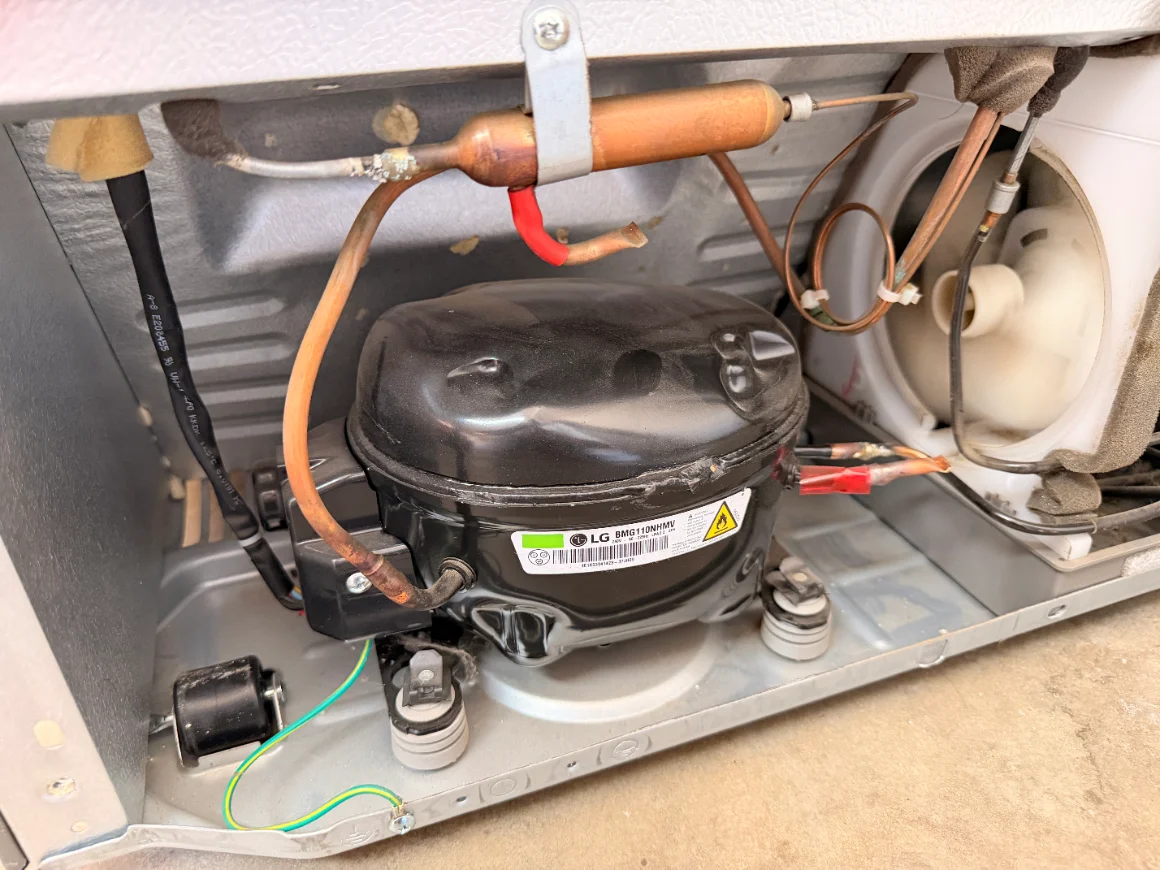
The condenser coils are the refrigerator's primary heat-release mechanism — they're where the refrigerant dumps the heat it pulled out of the fridge interior. Most modern refrigerators have the condenser either across the bottom front (behind a kick grille) or mounted on the back of the unit. In both cases, the condenser depends on airflow across the coils to dissipate heat.
Dust accumulates on the condenser coils over time. A light coating is almost invisible. A heavy coating — the kind that builds up after two or three Santa Ana seasons without cleaning — forms a thick insulating blanket that prevents heat from escaping. The compressor has to run longer and work harder to achieve the same cooling. You'll notice the fridge cycles more frequently, the coils feel very hot to the touch, and your electricity bill edges upward. In severe cases, the compressor overheats and fails prematurely. We see this regularly on fridges that are only 7–9 years old — machines that should have 15–18 years of life left.
Cleaning frequency: In most climates, condenser coils need cleaning every 12–18 months. In the Inland Empire and areas frequently hit by Santa Ana conditions, we recommend every 6 months — once in spring before the summer heat, and once in fall after the wind season peaks.
Dryers
The dryer is doubly vulnerable because it actively pulls large volumes of air through the machine during operation. Every load of laundry moves air from the room, through the drum, through the heater box, and out through the exhaust duct. All the dust that's floating in your laundry room travels that same path.
The lint trap catches the big stuff. But fine particulate — the kind stirred up by Santa Ana events — passes through the lint trap and accumulates in the exhaust duct. Over time the duct narrows. Airflow drops. The dryer runs longer to dry the same load. The thermal fuse trips more often. Fire risk increases. We've pulled exhaust ducts from homes in Wildomar and Winchester that had a three-inch round duct effectively reduced to less than an inch in diameter by compressed dust and lint — the dryer was still technically running but barely functional.
Additionally, the motor bearings and the drum support rollers in a dryer sit in a relatively open internal compartment. Fine silica-containing dust that enters through the cabinet vents can accelerate wear on these components — particularly on older machines where the seals aren't as tight.
Washers
Washers are less directly affected by airborne dust since their internals stay wet during operation. However, the control board and the motor on front-loaders are mounted in the lower compartment, which is ventilated. Dust accumulation on control boards can cause erratic behavior — intermittent error codes, buttons that respond inconsistently — particularly on humid days when dust-coated boards are more prone to conductivity issues. The pump filter, as noted in our Samsung repair story, is also more prone to clogging when the laundry room environment is dusty, because more particulate enters the drum with clothing.
Dishwashers
Dishwasher motors sit in the base of the machine. The vent that allows steam to escape during and after a cycle also allows fine dust to enter the motor compartment. On machines where the vent isn't well-sealed, dust buildup on the motor windings can cause overheating and premature motor failure. The condenser fan on dishwashers with a condensation drying system (common on Bosch models) is particularly susceptible to dust clogging its blades and housing.
Your seasonal maintenance checklist
After each Santa Ana season (typically October–November):
- Pull the refrigerator away from the wall or remove the kick grille and vacuum the condenser coils using a brush attachment or a coil cleaning brush. Take your time — the goal is to remove the dust without bending the delicate coil fins.
- Clean or replace the dryer exhaust duct from the machine to the exterior wall cap. Flexible foil ducts should be replaced with rigid metal ducting if possible — foil ducts accumulate lint more readily and are a higher fire risk.
- Clean your washer's drain pump filter (covered in detail in our Samsung repair story).
- Wipe down dishwasher door seals and check the vent flap for dust accumulation.
- Vacuum around the base of any pedestal fans or portable ACs — these pull even more room air through their motors.
Before summer (April–May):
- Second condenser cleaning before the refrigerator faces peak summer heat load.
- Check dryer vent airflow — hold your hand at the exterior wall cap during a cycle and confirm you can feel strong warm air exhaust.
- Run the washer's self-clean or tub-clean cycle to clear accumulated debris.
- Check window AC unit filters and coils if you have them — these get particularly dusty during wind events.
What this actually costs you if you skip maintenance
A refrigerator compressor replacement on a mid-range fridge runs $350–$600 in labor and parts. A new condenser coil cleaning brush costs $8 at any hardware store and takes twenty minutes. The math is not subtle.
A dryer vent cleaning runs $80–$150 if you hire someone. A dryer drum bearing replacement — the repair that results from running a dusty, overheated dryer for too long — is $200–$350. Again, the math is clear.
We're appliance repair technicians and we genuinely believe that the most useful thing we can do for our customers is help them avoid needing us. The seasonal cleaning habits described above will meaningfully extend the life of every major appliance in your home and reduce the frequency and cost of repairs over a ten-year period.
That said, if the dust has already done its damage — if the fridge is struggling to cool, the dryer is running hot, or the dishwasher is throwing error codes — we're available for same-day diagnostics across Riverside and Orange County.
Appliance struggling after wind season?
We diagnose and repair same-day across Riverside & Orange County. 6-month warranty.
Schedule now